What makes a museum feel ‘alive’?
That’s a question someone asked me last week. The context was brand and marketing, which might explain why my initial response was focused on practices.
Since then, however, this question has been niggling at me.
Alive?!
I like the adjective ‘alive’ applied to a museum [1]. To me, it hints at something deeper than ‘just’ practices. Yes, practices are important and they are probably what is most immediately noticeable to visitors when it comes to a sense of a museum being ‘alive’.
However, to be ‘alive’ is also about having a past, present and future. This is connected to the ability to change as we respond to changing circumstances or because of self-reflection. To be ‘alive’ means to grow, to gain new perspectives, to change (hopefully for the better) as we grapple with experiences, mistakes and our own flaws. To be ‘alive’ means to show all of this and share it with others who are ‘alive’.
So, what does this mean for museums? What makes a museum feel ‘alive’? [2]
Acknowledging our historicity
Museums are not institutions that emerged in a vacuum – they were shaped by the values and often biases of our founders and those who came after them. Being open and entering into an honest dialogue with our visitors and communities about our past and its impact on our present is a step towards being ‘alive’.
Accepting our ‘flaws’- and working through them
This is connected to acknowledging our historicity, and specifically as it relates to our collections. Collections are still the defining characteristic of museums, and the Authorised Heritage Discourse still rules firmly here. Materiality and ‘the original’ are regularly held supreme, even where historical biases in collecting and historical marginalisation of people has led to glaring gaps in our collections. That is a flaw in our ability to fully represent history as we understand it today, and a museum that is ‘alive’ is open about this and finds alternative solutions to ensure representation.
Talking about our values
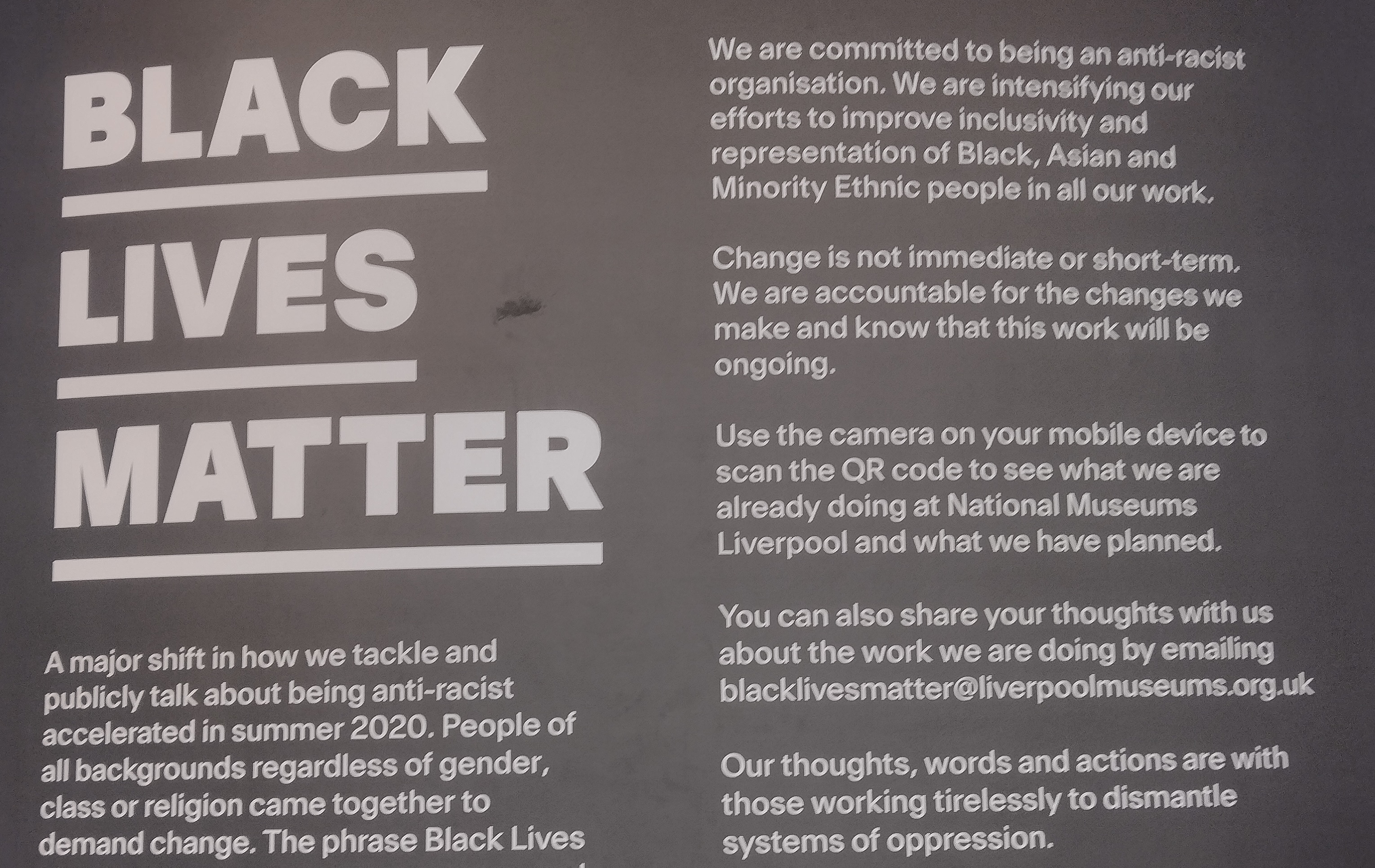
As we grow and change, so do our values. A museum that is ‘for everyone’ needs to reflect on its values to make sure ‘everyone’ feels welcome. We also need to talk to our visitors (and partners, and communities, and staff) about them and be open to having them challenged. Only then will these values remain relevant and meaningful to everyone that shares in the museum, and thus keep them ‘alive’ [3].
Owning it
As places that are about facts (hopefully), museums sometimes seem to have a hard time owning when something went wrong. This could be a mistake on a panel, or taking the ‘wrong’ approach to an engagement project. To be ‘alive’ means to own it, acknowledge it for visitors to see and share our learning openly. It makes a museum human and decidedly more approachable and open to community knowledges. And as we become less concerned with maintaining a façade of infallibility, we can focus more on being ‘alive’.
This is what I’ve come up with so far about the deeper, more fundamental elements of a museum that feels ‘alive’. But what about those practices? Which ones are ‘alive’?
Here is what I responded in the original conversation:
- Practical, embodied learning – putting on a belted plaid at Culloden Battlefield, or manually moving goods through the Warehouse in the model we’re currently having created for the National Waterfront Museum.
- Discovery and exploration – having to use your mind to arrive at new knowledge in a playful way, like children can do in the City Lab at the Museum of Cardiff.
- Sharing thoughts with other visitors, but without necessarily having to be in the space at the same time – like the digital messages to Admiral Yi at the National Maritime Museum of Korea, which floated along for others to read.
- Smells, sounds, and historical machinery in action – seeing the looms weaving at our sister museum, the National Woold Museum in Drefach
- Activity in the galleries – children creating art right among old masters at the Scottish National Gallery in Edinburgh.
Notes
[1] From Welsh ‘amgueddfa fyw’.
[2] For the purposes of this post, I’m thinking mostly of publicly funded museums with a broad remit who have been around for a while, rather than private, specialist museums of more recent origin – although much of what I’m listing can be applied to them as well.
[3] I feel that very often, values are assumed to be shared, rather than discussed. There’s also often an element of activism disguised as values, which then leads to museums feeling less welcoming and open to dialogue, which is my definition of ‘alive’.


