Historic buildings can be a challenge when it comes to museum exhibitions. Sometimes, however, they could be immersive storytelling tools in their own right.
I was reminded of this on my recent visit to the Hällisch-Fränkisches Museum in Schwäbisch Hall, Germany. It is housed in an ensemble of seven historic buildings right in the heart of the historic town centre. The museum focuses on the history of the town and region, so the buildings really lend themselves to be used in telling that story.
The Sense of Place
For example, the Keckenturm, a rather prominent building in the city panorama, dates back to the 13th century. It hints at the need for protection before it was adapted over the following centuries as a status symbol for a wealthy family. Its baroque hall is still in situ and the museum believes it was used primarily as a music room by the family. Using this sense of place, the Keckenturm can give answers to several interesting questions about Hall’s history: for example, who felt they needed protection, from whom and why? How did a wealthy family acquire its wealth? What was the musical fashion at the time? Why was there a fire in the 18th century, and how did the Keckenturm escape it?
Like the other buildings in the museum ensemble, however, the Keckenturm is not used in this way. The buildings have been so well adapted and connected as exhibition spaces that I was only barely aware of moving from one historic building to another. The overall historic sense of place of where I was remained obscured. Even the museum map only mentions two buildings by name, focusing instead on the topics of the exhibition areas.

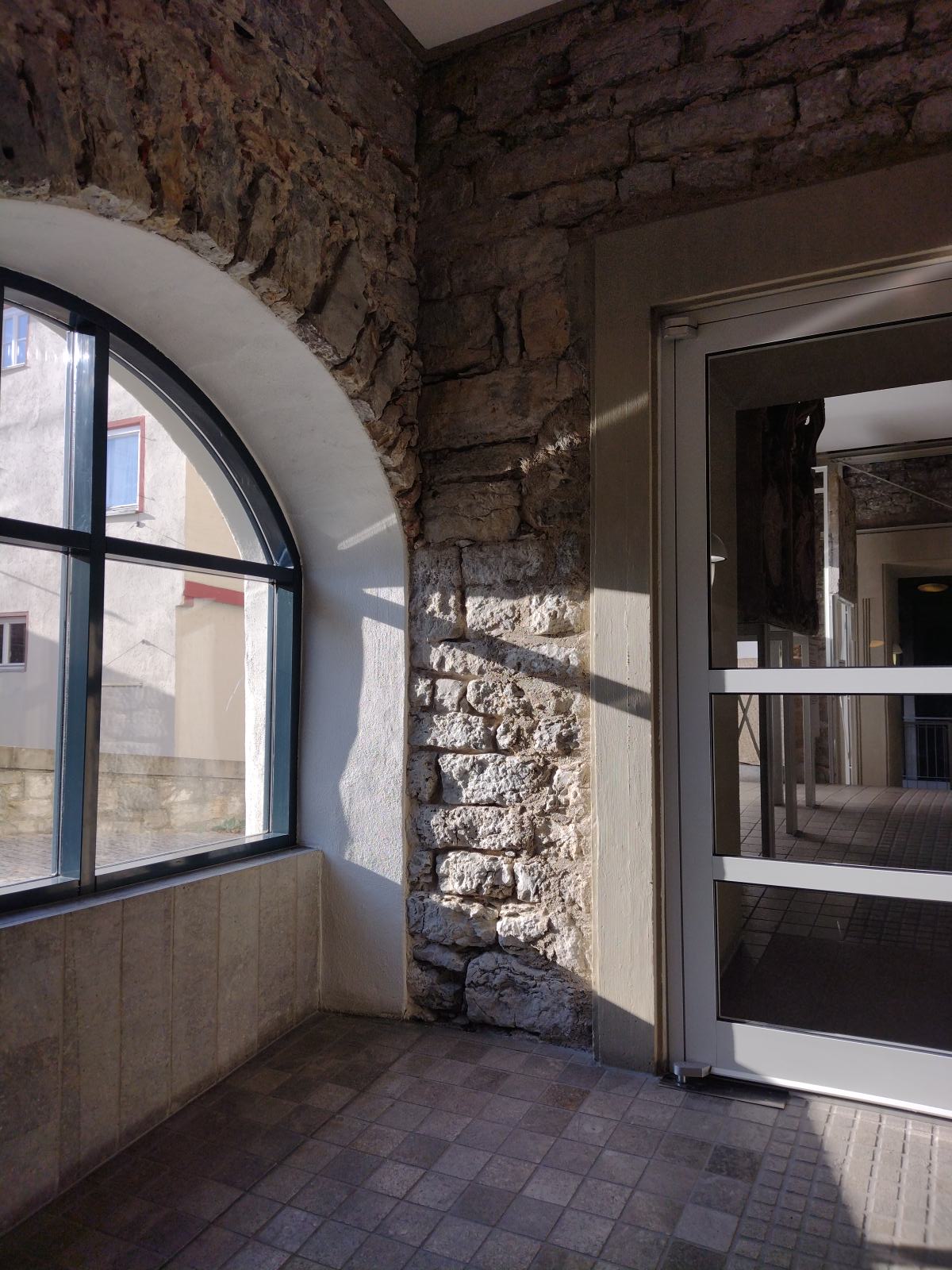
This approach did solve the issue of making the historic buildings work for the museum. The modern architectural interventions are elegant and seamless, and the visitor route clear. To me, it still felt like a missed opportunity, though, especially from my perspective of presenting exhibitions as storytelling.
What’s the story?
As with the Keckenturm above, I am sure the other buildings connect with important developments in Hall’s history. I would have loved to see these used and made visible. The museum ensemble is in the town centre: how do they relate to that town centre over time? How has the town changed around them and what did that mean to the lives of the people who lived in them? The exhibition started with a model of the town, but the interactive part of it didn’t work, so there was no opportunity to get the wider perspective of the buildings in their context here either.
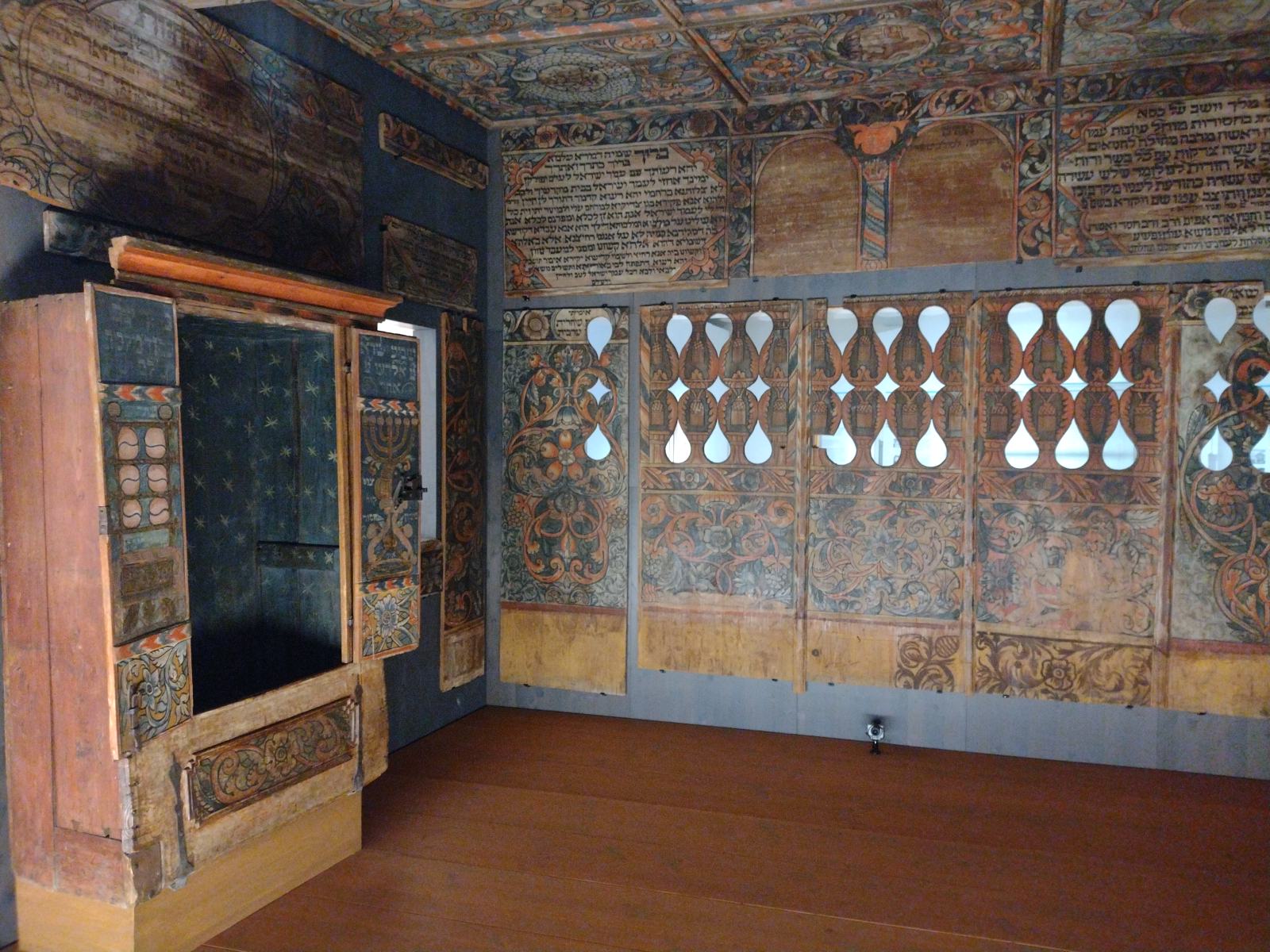
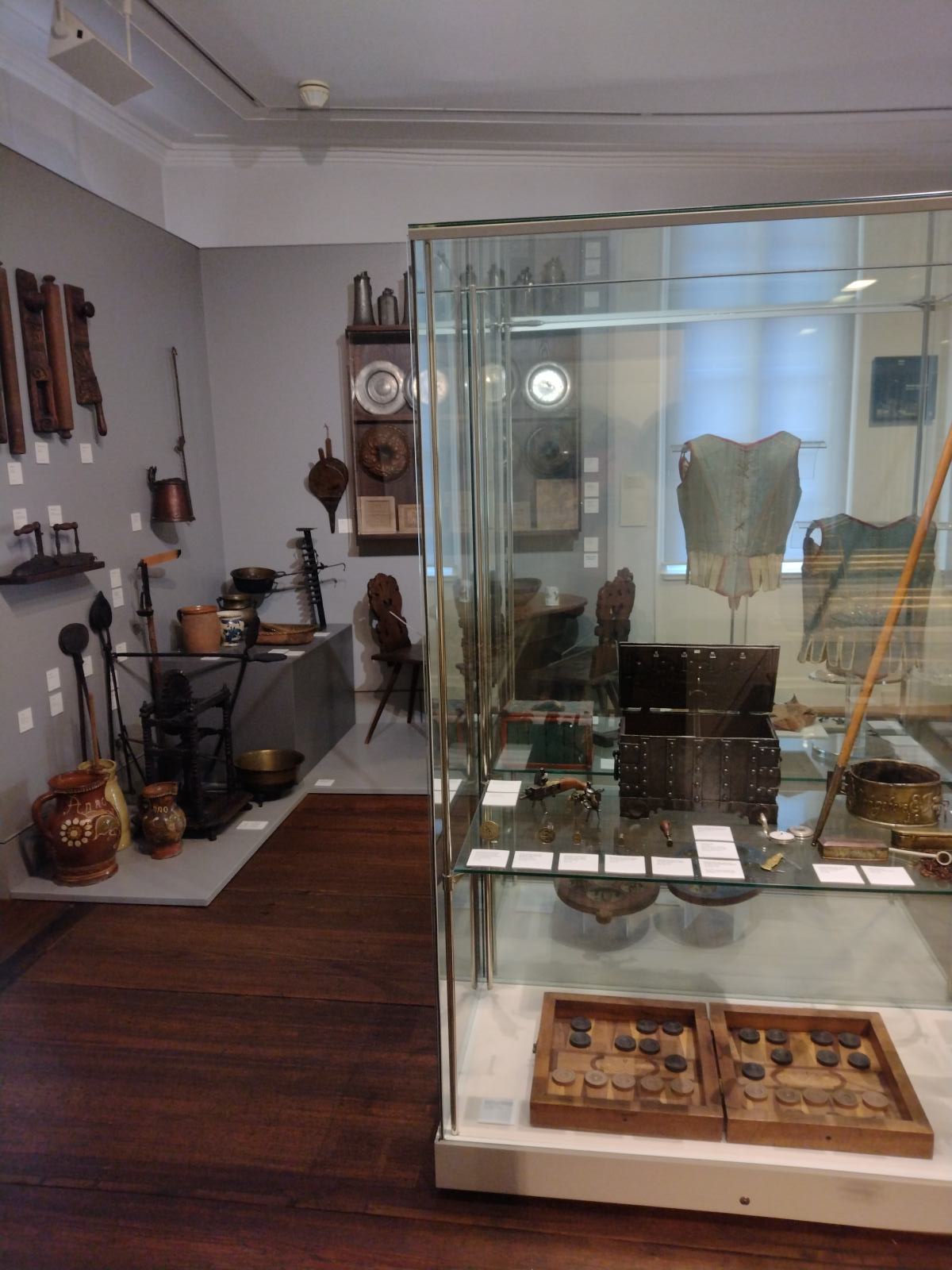
As it were, my experience of the museum was one of objects. The museum’s collection is clearly vast, and some objects are truly impressive. For me, they remained isolated, however, presented as individual pieces under the broad heading of the particular exhibition space’s topic (e.g. ‘Middle Ages). There was no story, nothing to let me know I was here and nowhere else.
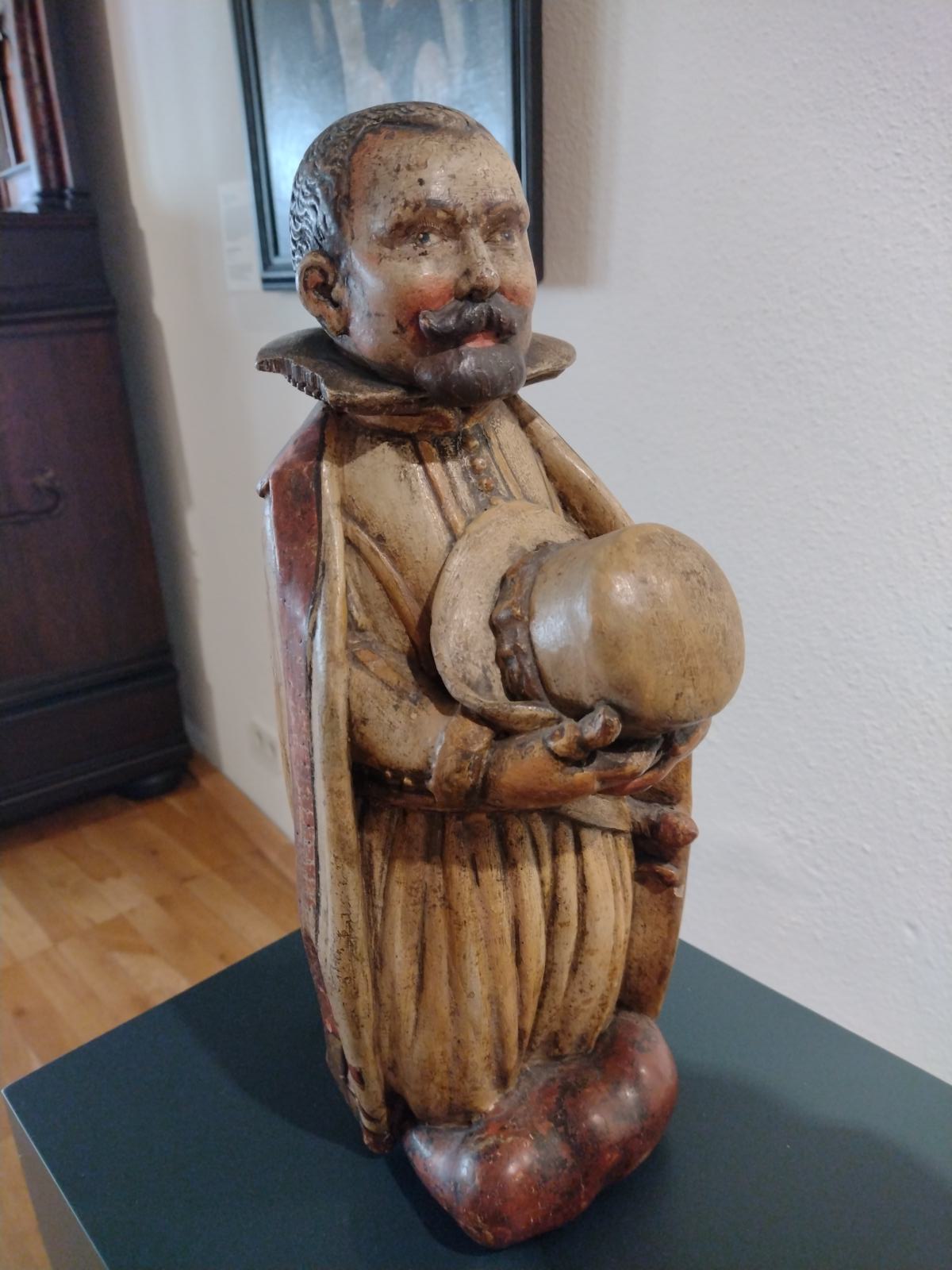
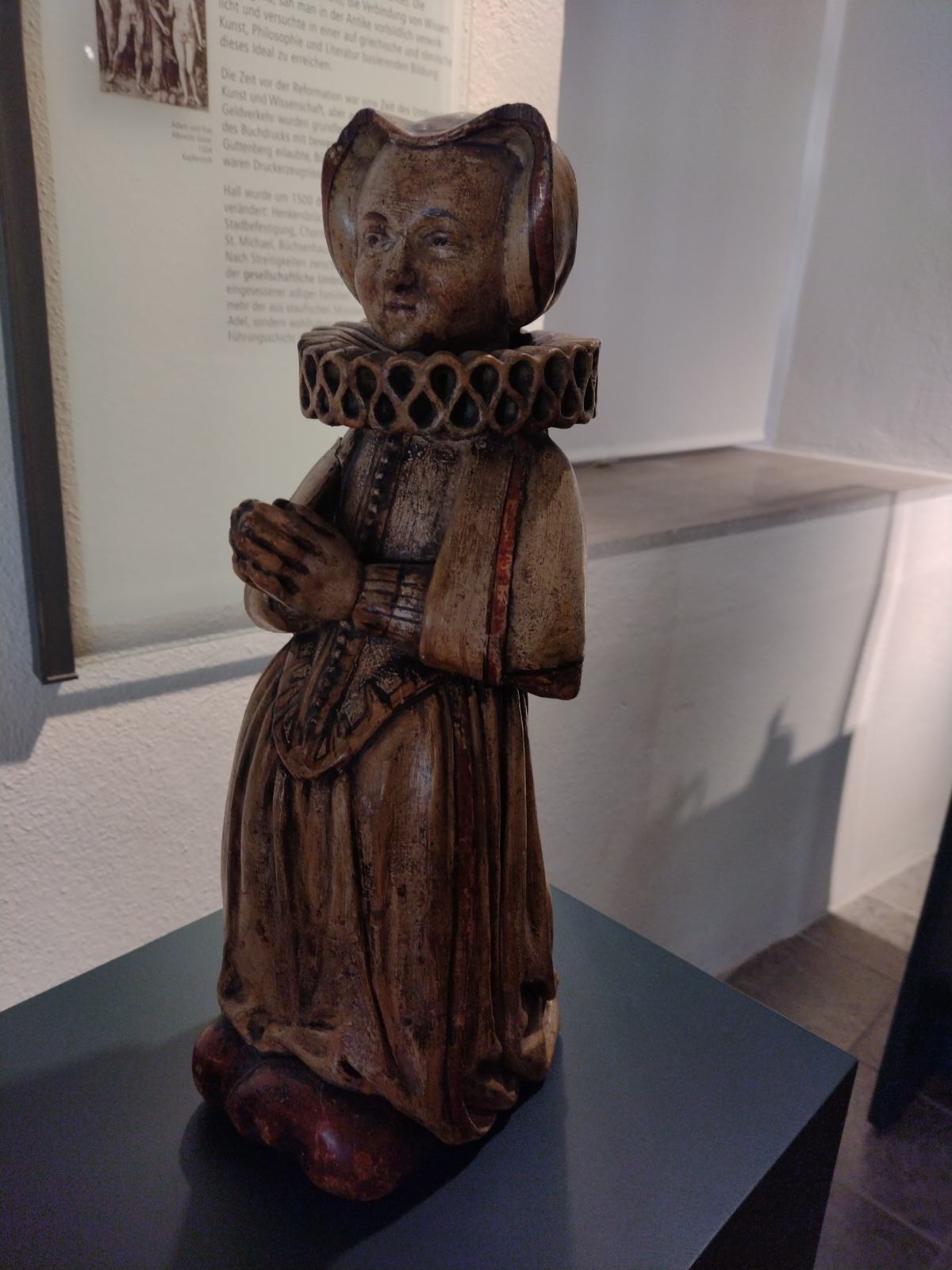
As I followed the visitor route, I soon felt reminded of other local history museums I have visited. The figures of the donor couple I had admired in the Reformation room might have stood in any one of them: how they formed Schwäbisch Hall’s unique story did not become clear to me. Yet I am sure that story is there. It is a matter of telling it with what you’ve got. And at the Hällisch-Fränkisches Museum, they’ve got a lot.

 Nicole Deufel's Blog