Sometimes I walk through a museum or visitor centre and wonder, why are we here? This is the more frustrating at a site like Keltenwelt am Glauberg where, according to its own interpretation, they discovered a ‘scientific sensation’. So I’m feeling inspired to write another ‘Interpretation 101’ post, using Keltenwelt am Glauberg, and specifically its presentation (and interpretation) of the key find(s) on site as an illustration.
Why We’re Here
From what I could gather there are two key aspects to why the Glauberg today should be a destination for the history of the Celts in Europe: one is the discovery in the mid-1990s of two graves thought to belong to tribal chiefs, complete with a ceremonial pathway suggesting that this was part of a ritual landscape. The second is the find of a nearly complete statue of one such tribal chief [1].
This is as illustrative and experiential as history can get. Even though there is very little meaningful interpretation to be found outdoors, the main grave mound and part of the ceremonial pathway have been reconstructed, and there is just enough information to allow you to connect with the place by walking the many paths around the area [2]. The statue that was found is also still on-site, as part of the museum display.
It is inside the museum where things fell rather short of expectation [3].
How It Was Done
There is a lot I could say about the exhibition as a whole. I will instead focus on its presentation of the statue of the chieftain and the (lack of) connection to the site itself.
The Missing Connection
Starting with the latter: The architecture of the building is, in fact, beautifully orientated toward the reconstructed grave mound, and I assume that at some point the idea was to incorporate this fantastic view into the interpretation inside. That would have been great! That mound out there is why we’re here and nowhere else.
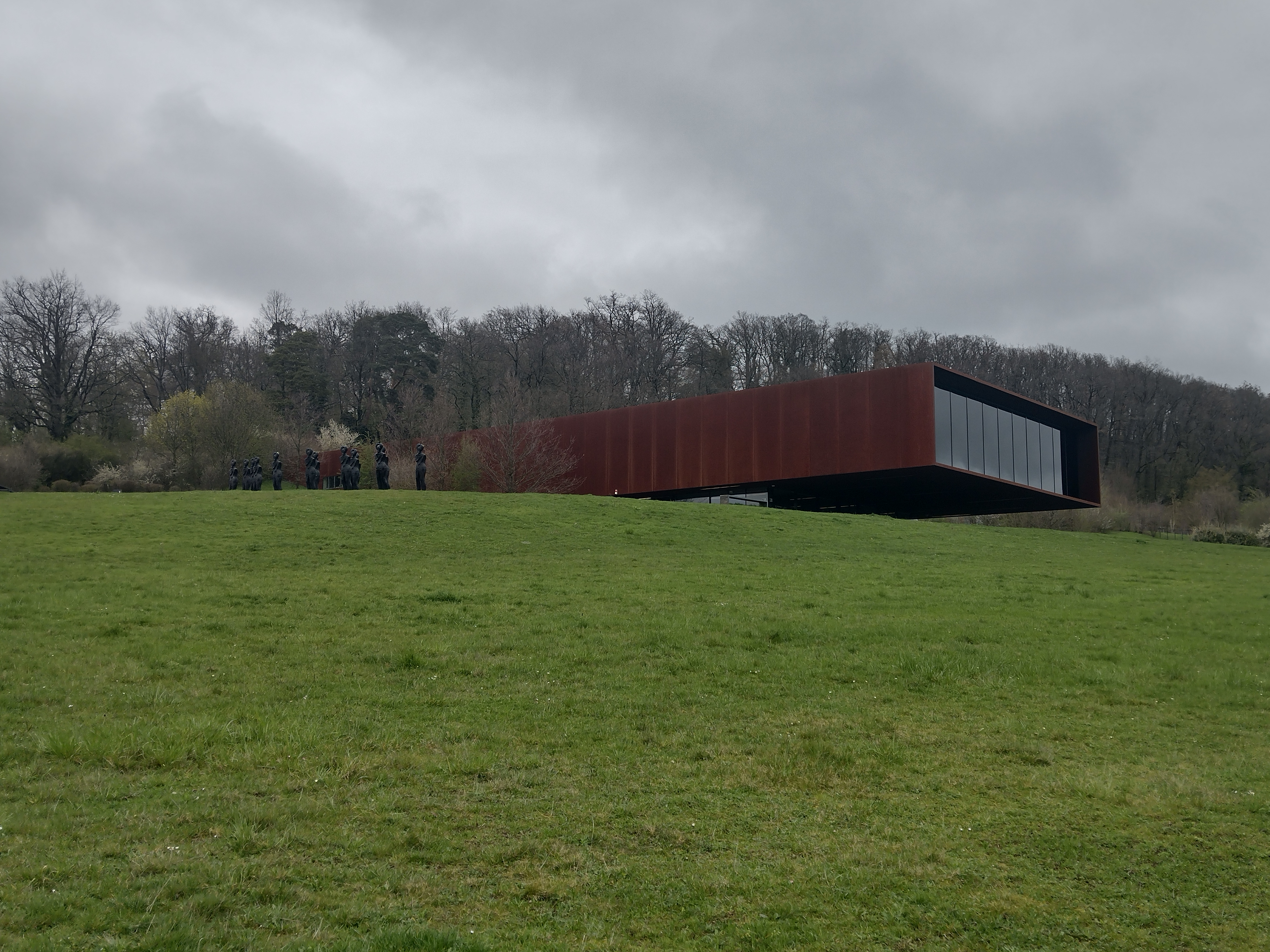


Unfortunately, during my visit this view was obscured by the exhibition architecture of walls and displays. The paths leading to it – two corridors down either side of the exhibition – did not contain interpretation that built up the story to its culmination in this view. The paths were just that: corridors. The connection of the exhibition with the landscape beyond was severed.
Given the intention to have the site inscribed onto the Tentative List of UNESCO World Heritage, this is something that definitely should be rectified [4]. I am repeating myself but people do and will come to this site because of what was found there. A museum which does not make that connection to this landscape might as well be placed in Frankfurt. It would be more convenient.
The Statue
Just as unforgivable, in my view, was the presentation of the main and most sensational find of the site: the nearly complete stone statue of the Celtic chieftain. This was tucked away in one of the thematic ‘rooms’ of the exhibition. Visitors could enter this space from one of three access points: neither of these provided a clear sightline onto this amazing object.

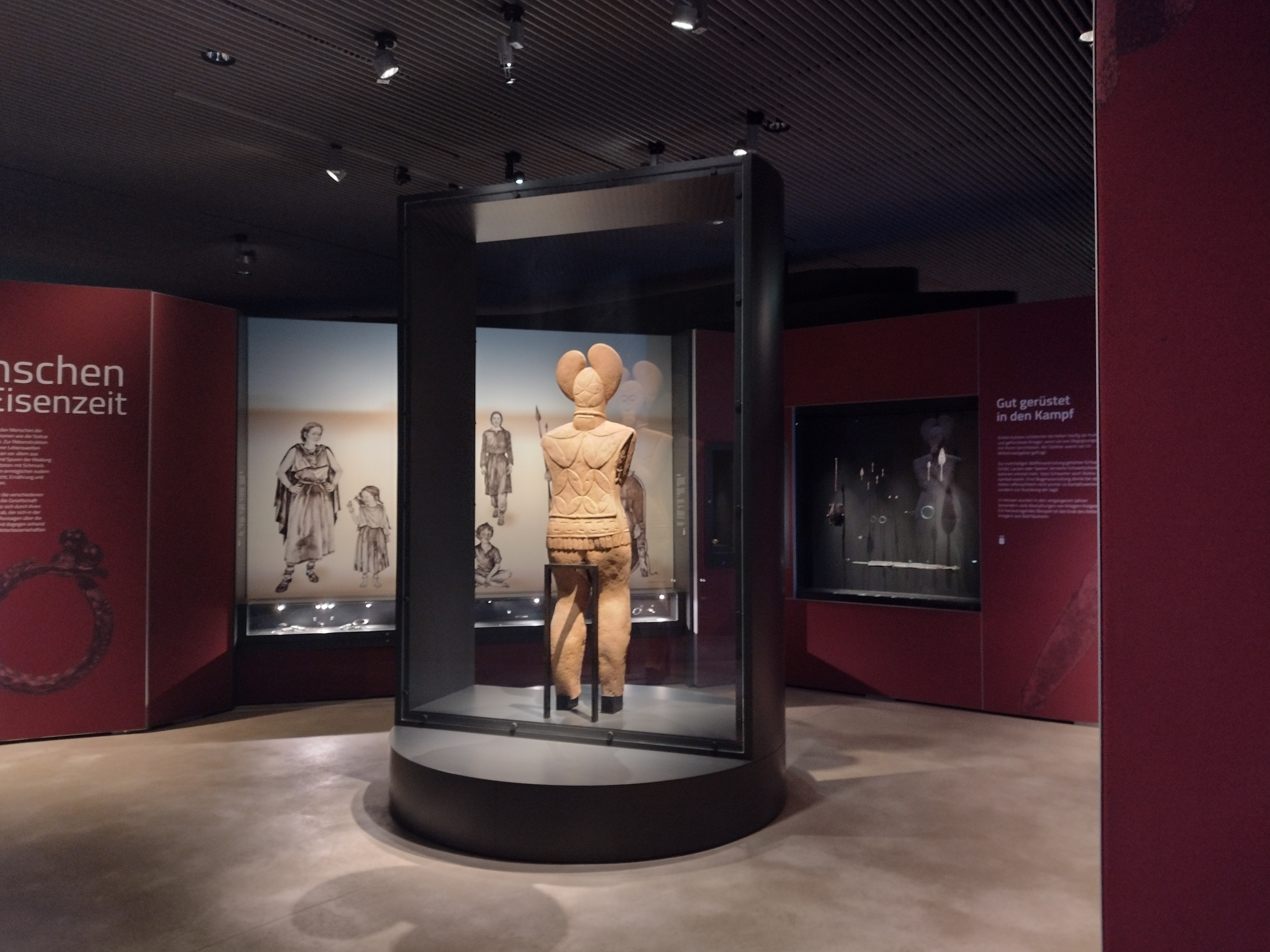

Instead, it was presented in a large display case with broad opaque side panels that blocked the view of the object on two approaches. This might have been somewhat alleviated had the statue inside the case at least faced outward to the main path of visitor flow. Inexplicably to me, however, the statue faced the opposite way onto another display. What one saw, therefore, was the statue’s back.
In order to see the front, one had to walk around the case and stand quite close to it, with one’s back right up to the other display. It felt claustrophobic, and it took away from the impressive size and completeness of the statue.
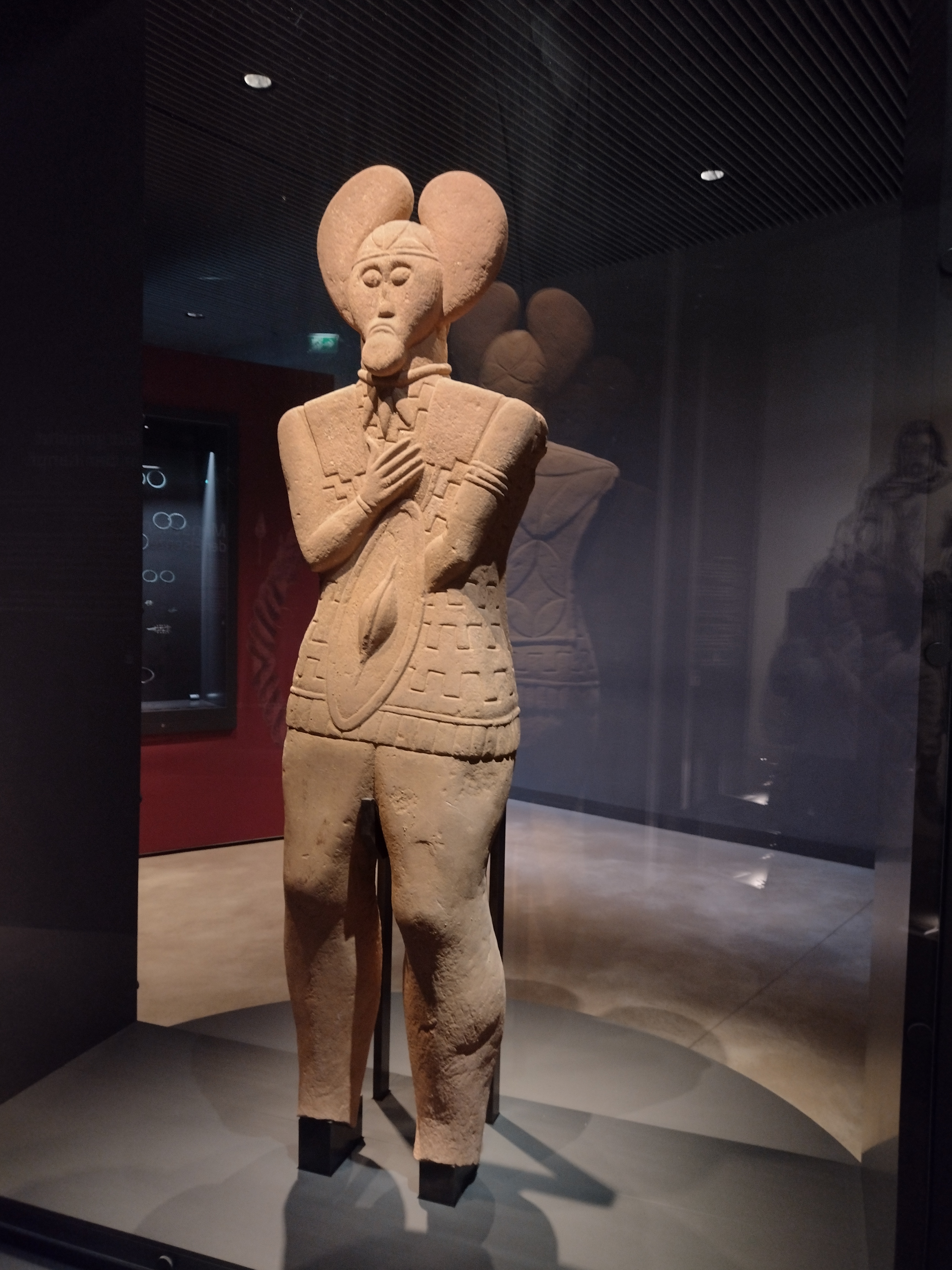
What is more, since this part of the exhibition was quite far back, my suspicion is that many visitors will no longer have the energy and interest to explore this part carefully, and so they may well miss the key object that makes this site so special.
How It Could Have Been Done
I keep coming back to storytelling when thinking about implementation of interpretation. At Glauberg, it seems quite clear why this site is special: because of the graves, the ceremonial pathway and the statue. This, then, is your story and the reason why people will come. This story really must be told prominently.
The statue, placed centrally at the beginning of the exhibition for all to see and not miss, could have provided the starting point of a narrative arch that leads visitors through the story of the Celts at this site and beyond to its culmination within the wider landscape [5]. The view out onto that landscape with the grave mound and ceremonial pathway could have served as the pull, either visible from all angles or revealed more dramatically after a slow build-up [6].
There should also be a link between this interpretation indoors and a good interpretative infrastructure outside. In my view, the exploration of the landscape not just around the mound but also the hill on which various settlements have been found should be communicated as an intrinsic part of the visit [7]. This can only succeed if that very landscape and its finds have been referenced as part of the exhibition’s storytelling. It should feel like a must-see to visitors, which is really what it is.
In this way, visitors will remember this site. It won’t just feel like any other museum that ultimately blends with all other museums they see and thus could have been anywhere. It is the Glauberg, in the State of Hesse in Germany. Where the archaeologists found this amazing ritual landscape around a Celtic grave and I could even look the chieftain in the eye. Or at least the eye of this fantastic statue his contemporaries placed near his grave. Amazing!

 Nicole Deufel's Blog