It is a rare occasion that I walk through a museum and smile with joy about how the story is told. My recent visit to the Erwin Hymer Museum (of camper vans) was one such occasion.
The very first contact with the exhibition is as informative as it is fun. A few words of welcome, the life-size picture of a smiling gentleman with a caravan under his arm, from which a string of postcards floats away into the exhibition room beyond. The scene is set: we’re going on a trip.

What follows is a transitory mixed-media space depicting the hectic back and forth of a family packing their bags. It provides a bridge from the outside world into that of the exhibition and makes for a unique sense of arrival and excitement about the story to come.
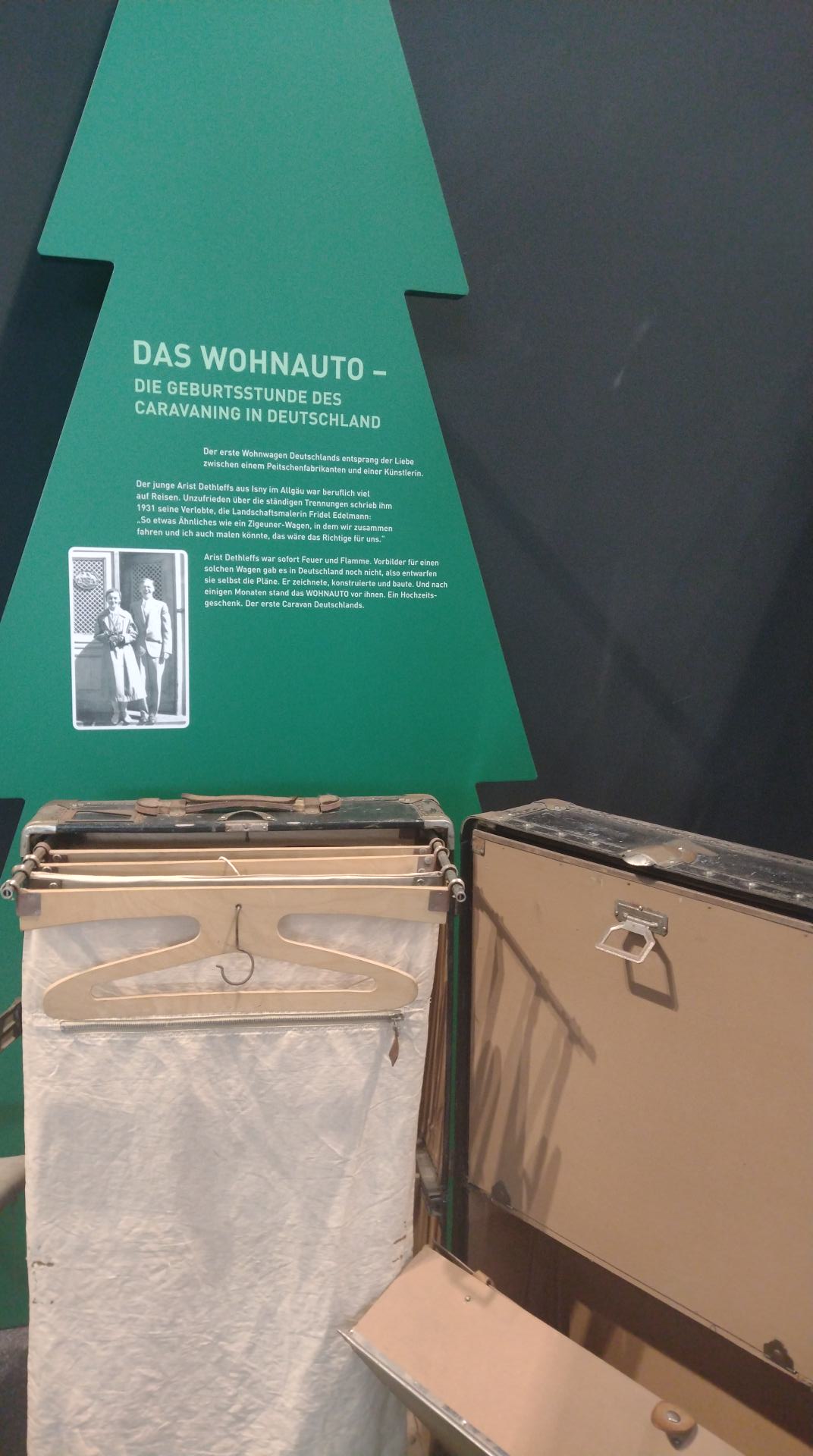
That story is entirely structured around the destinations that people chose and their reasons for doing so. We meet individuals like Arist Dethleffs who built the first version of a camper van in Germany to enable his fiancée and himself to spend more time together while he was away on business – a wonderful way of making this personal.

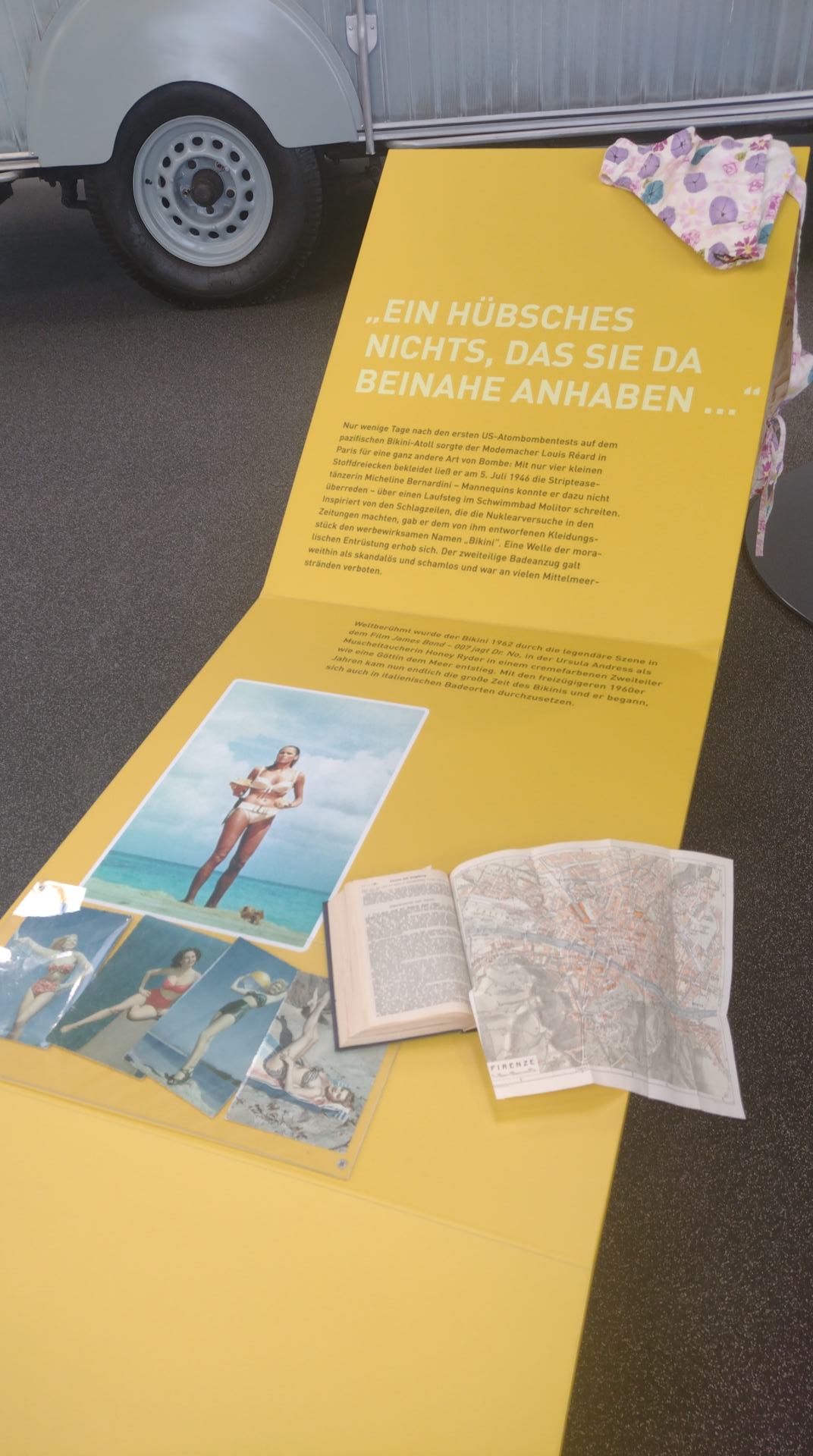
As the visitor journey progresses through the exhibition’s destinations along an imaginary road, we also learn more about social history. This is cleverly introduced – like the story of the bikini in the section on Italy, presented on a sunny yellow deckchair. Another great example is the juxtaposition of media representations of events in what used to be West and East Germany, all while we find out more about the Baltic Sea as East German’s favourite camping destination.

Meanwhile, those that are primarily there for the camper vans still have everything to go for. There are vans aplenty, and sections on technology and design. That’s not my cup of tea so I really appreciated the way in which the exhibition seamlessly catered to all different interests, including those of children.
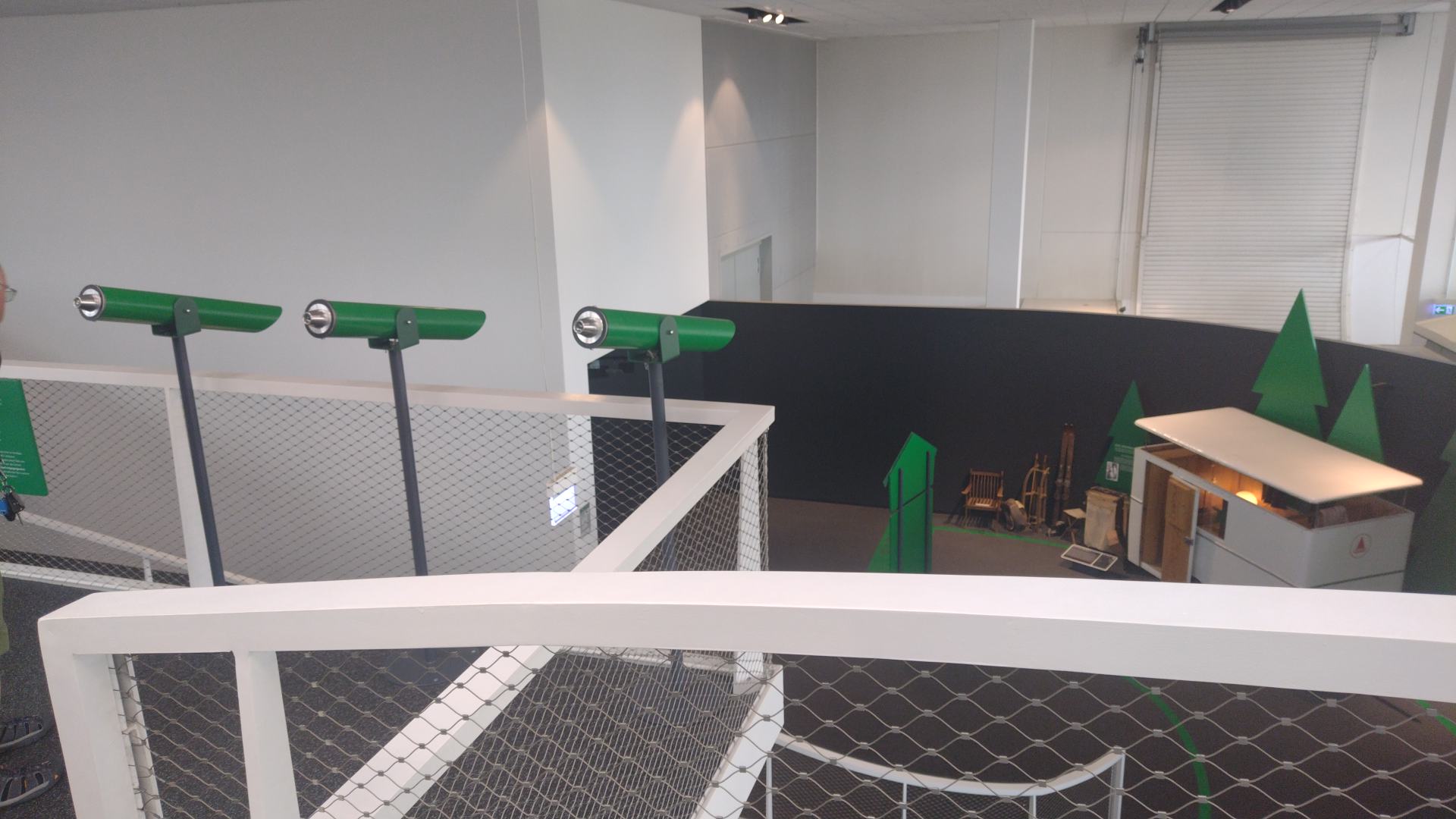
That is truly an achievement which in my view was also made possible by a distinct sense of humour. As the first destination we encounter is the Alps, it makes all the sense in the world to be guided up a ramp to the second level by a sign that reads ‘Auf die Gipfel’ – Up to the mountain tops. Up we hike, only to encounter a viewing platform with telescopes just as we would on a mountain path. Looking through the telescopes made several people I watched, myself included, laugh out loud. Wonderful! Onwards we went until I laughed again: at the top there was a ‘Gipfelkreuz’ or summit cross. Very smart, and a great reward for having made it.



To top it off, at the end of the exhibition there isn’t just an exit sign. Keeping with the sense of exploration and travel, the exhibition sends us ‘Hinaus in die Welt’, Out into the World.

This is what makes this exhibition such a success in my view. Someone clearly thought about what their story focus would be and then stuck to it. Every panel, every interactive, every experiential space down to the visitor journey itself is strung along that narrative thread. The exhibition design not only holds everything together visually, but also makes really smart use of the museum space. At first glance, one may think that the museum’s subject matter of camper vans and travel, and the social history surrounding both, makes this easier than in other cases. I don’t believe that. I think this is simply exemplary interpretive planning and implementation. Kudos.

 Nicole Deufel's Blog