Last week I returned from a great stay in South Korea. There are a lot of impressions and experiences I still need to process, but among the aspects that immediately struck me was the sheer number of amazing urban spaces of community dotted around Seoul.
Cheonggyecheon
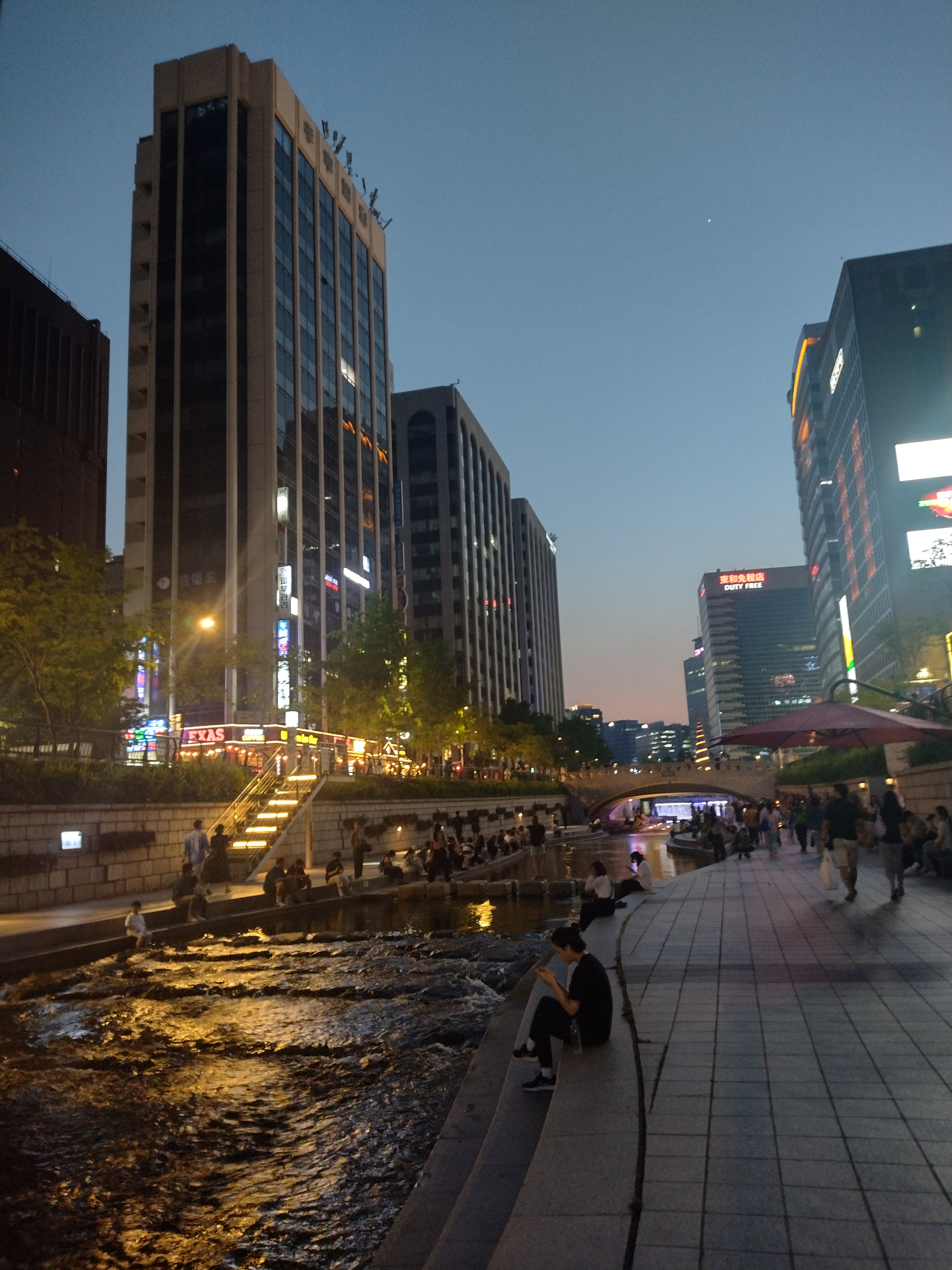
My favourite, and certainly an obvious one, is Cheonggyecheon. This stream flowing through Downtown Seoul had been covered to form a road artery after the Korean War, but was reinstated in the early 2000s. Along its banks a sort of public part was developed, with an array of steps and stones interspersed with green spaces and features such as a waterfall. I went there for the first time on a Saturday evening, when they had a music and light show at the waterfall. The atmosphere was inviting and relaxed, with lots of people just sitting and enjoying the environment. I returned at all hours of the day several times during my stay, and it was clear that this was a space that people had incorporated into their daily lives. I saw children play in the water, people jogging along the path, friends meet and chat or just watch a heron that seemed to live there [1]. This sense of being part of the local community was something that perhaps attracted me the most, although the contrast of immersing yourself into this tranquillity while just a few steps above there is the hustle of one of the most modern and busiest business districts of the world, was just as intriguing. I was told that the renaturation of this stretch of land has also made a positive contribution to the city’s climate and increased biodiversity, something that I haven’t been able to check but which I can well believe.


Gwanghwamun Plaza
Another obvious space, although surprisingly not mentioned in my guidebook, was Gwanghwamun Plaza, or more specifically the green space down one side of it. This was broken up into many small areas in which chairs and tables were placed, creating very intimate niches where people would again just sit for a chat, a bite to eat that they’d brought, or to play games. At night time, these spaces were bathed in a warm white light from streetlamps, to which during the time of my visit were added the colourful lanterns strung between the trees in celebration of Buddha’s birthday. Gwanghwamun Plaza itself is interesting for the presentation of Admiral Yi [2] as well as the connection it creates between the modern city and Gwangbokgung Palace, so I thought it was particularly smart and successful to add this other element to it, which gave people a reason to spend time here and relax. They seem to make plenty of use of it, judging from how many locals were there every time I passed.

City Life Spaces
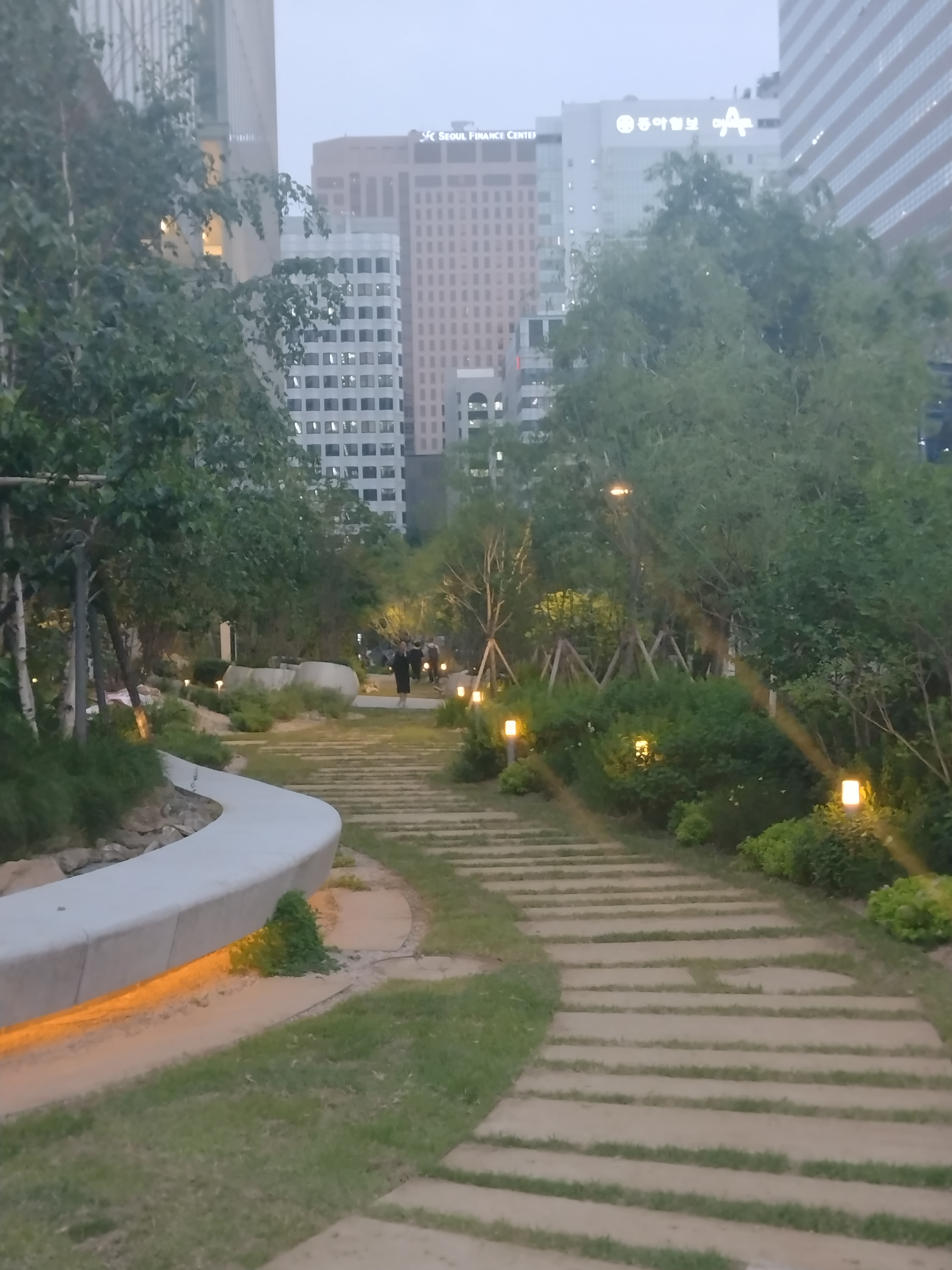
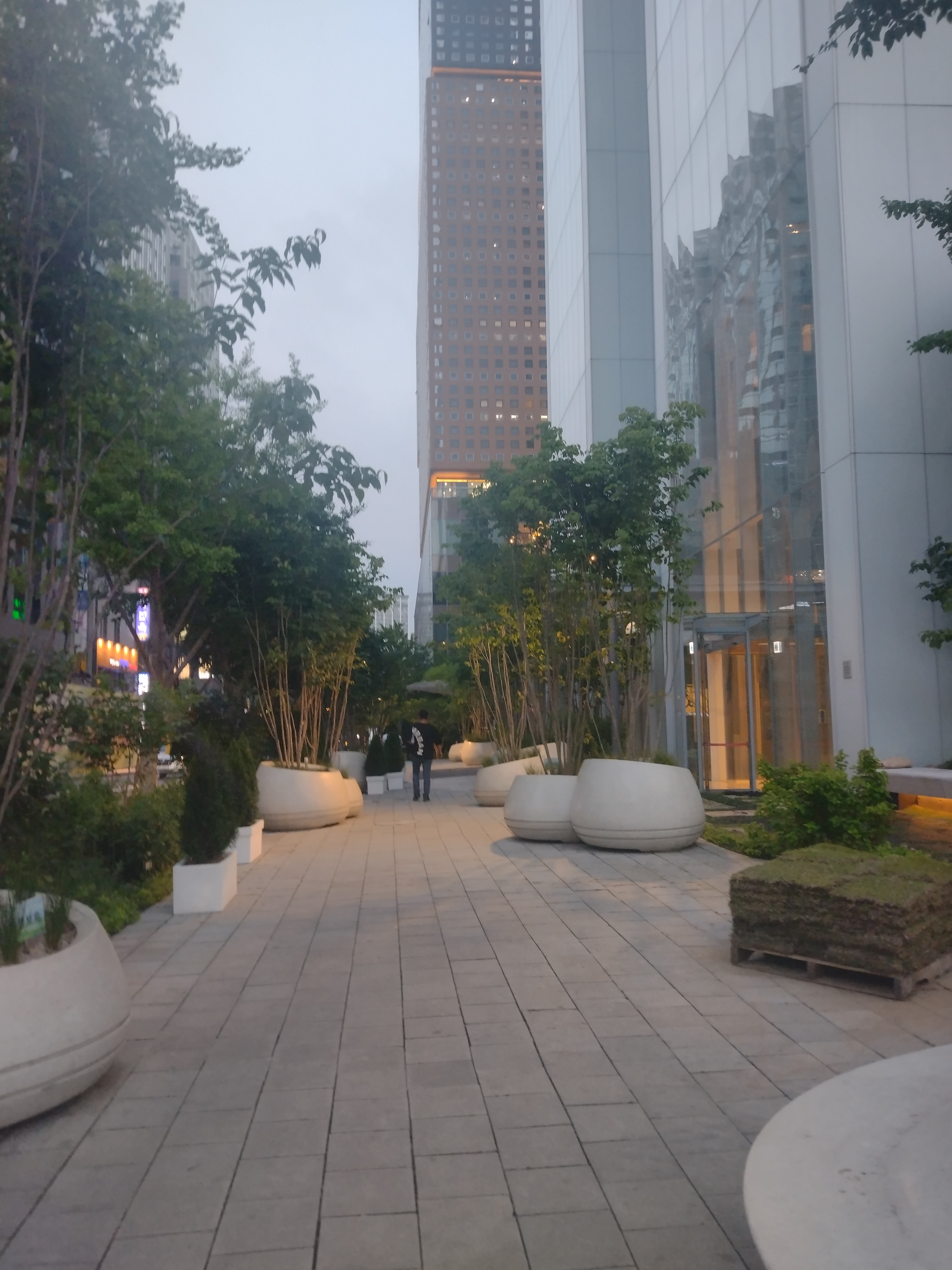
However, alongside these two and other, similar spaces which felt more deliberately developed, there were also lots and lots of smaller areas that seemed to just be a part of the city’s life: not at any noteworthy location but just where people will be as they go about their day. These might be narrow park-like spaces around office buildings, pleasantly meandering paths shielded from the road by trees and bushes, or mini-plazas popping up between buildings. Still, these spaces were designed to invite you in to pause, with attractive areas to sit, interesting vistas and at the very least pleasant lights during the evening, if not other features as well. It was these natural-seeming spaces that impressed me the most. Not only did they make what might otherwise have been an overwhelming metropolis feel intimate and green, they provided spaces for people to mingle. It would be interesting to see if they actually have that impact on those spending time in these neighbourhoods. Just walking along, it definitely seemed that way to me.


Notes
[1] Of course, it might not have been the same heron at all 😊.
[2] This will definitely feature on this blog at some point soon. It went right back to questions of heritage as nation and (imagined) community building, which I found really interesting.

 Nicole Deufel's Blog